
This release focuses on some improvements to creating stacks, and to manipulating all the layers of a single stack at once.
Stack creation
You’ll now always be able to choose the name of a Stack before it’s created, regardless of how you create it.
- Creating a stack from the “New Stack” page - where you can choose from any upload in an experiment - is unchanged.
- Creating a stack from an upload page using the “load into stack” bulk action (see above video) will now let you pick the name for the Stack before it’s created…
- …as will creating a stack from the dropdown by the side of a single upload page (see above).
Default stack names are now less florid - say goodbye to all our colourful animals. The default is now Stack YYYYMMDDHHMMSS, which is almost certainly something you’ll want to change, but now is much easier to change at point of creation.
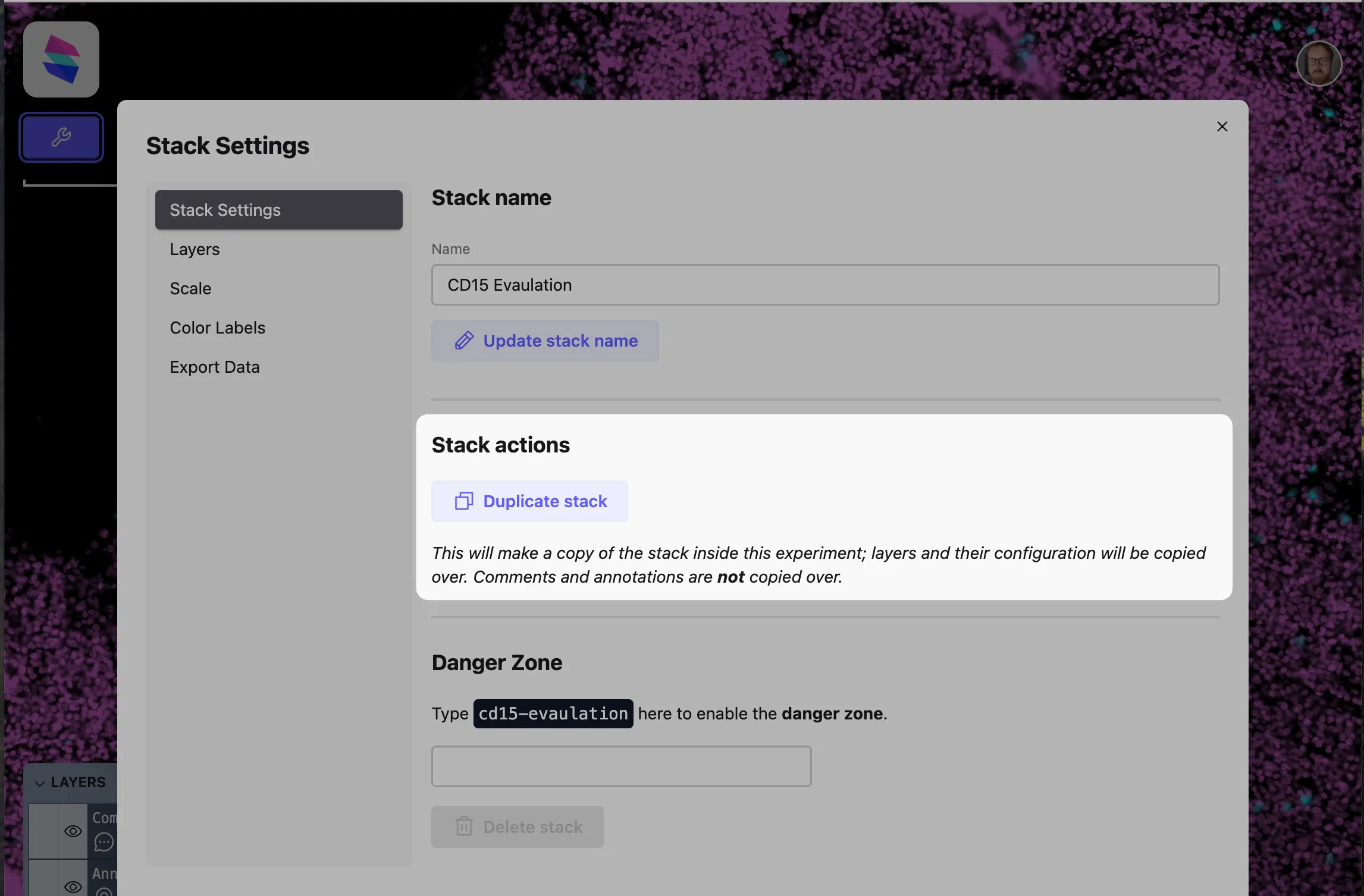
We’ve added the ability to duplicate a stack easily. You can find this in the Stack Manager when you’re viewing the stack you wish to duplicate. Duplicating a stack will copy all layers and their layer settings, but will not copy comments or annotations over.
Bulk layer actions
The Layers panel in the Stackviewer has seen some changes.
Showing/hiding the layer panel is now done on the left side of the panel (or, indeed, by clicking the word ‘Layers’ itself). This has been done to accomodate the new bulk layer action menu, accessible top right.
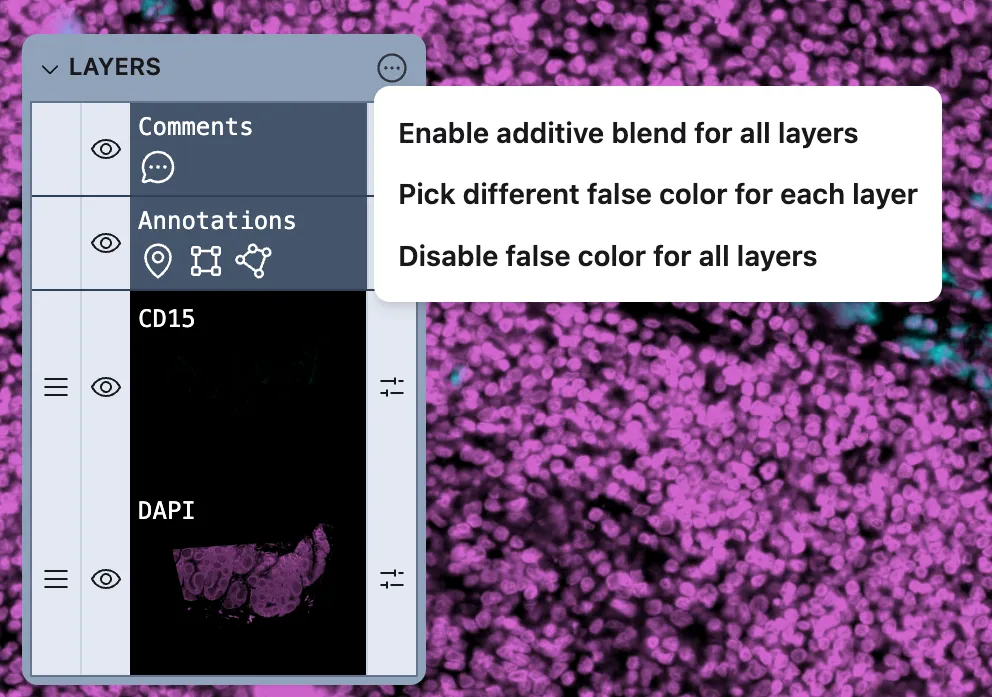
This menu houses controls that affect all layers:
- Enable/disable additive blend for all layers toggles the additive blend mode for every layer in the stack at once.
- Pick different false color for all layers will give each layer a different colour from a list of 10 (which then repeats). In conjunction with the previous option, this is a very fast way to take a fluorescence stack and view it as a set of false-coloured transparent layers. As well as picking a false color, the false color toggle will be turned on for each layer when you choose this option.
- Enable/disable false color for all layers toggles the false color option for every layer in the stack at once.
Along with those, there are a few minor under-the-hood improvements, and some groundwork for a more major feature due to be released in the coming weeks.